Showing posts with label Products. Show all posts

Feb 27, 2015

Music projects and membership site.

Many things have happened for our family lately- moving to California, moving into an RV, and now, in our effort to be location independent, I have been hard at work on my music website.  Here are some of the free printables I have posted recently.

Glissando is a board game based on Parcheesi.


Solfege Fingers is a singing game.


Music Berries is a board game with many different uses.  White background also available.


Solfege Hopscotch Game is a singing game played with coins and your voice.


I have also purchased some video making software and learned in part how to use it.  I'm excited about how this tool will help me make build more materials in the future.  I made this Major Key Signature tutorial with full-sized printables.


I've also been making videos to accompany the Mother Play project I did a few years ago, making recordings from Froebel's original Kindergarten music.


But of all of the projects I've done, I am most excited about my new membership site.  I've been wanting to build one for a long time, but it was cost prohibitive.  The technology and software became available to me about a week ago, and I jumped for it.  members.teaching-children-music.com is now live.  All of the Mother Play videos I've made are on the site, as well as all of the materials from The Solfege Train and Beginning Rhythm, and I have great plans for this website.  No longer do I have to wait until a large project is completed before releasing my work, I can add materials as I make them.  Please consider joining.  :)  Better yet, once you are a member, you can join the affiliate program and make a 40% commission on any sales you refer.  Membership access is only $30 per 6-month period.  My goal is to provide deep value to many people at as an affordable price as I can and still earn a fair wage for my work, as my entrepreneurial Dad has taught me by example.  I really hope I will be able to build a successful business that can support our family and allow me to make materials full-time.  The more members, the more time I will be able to devote to the site.

So here's my little plea for action in my shameless plug allowed in places like a personal blog- please consider joining the membership site if these materials are useful to you.  There's a lot there!  But if it's not a good fit for you right now, maybe you know someone else that would like these materials.  Homeschoolers, music teachers, and public school teachers who cover music, and really, anyone wanting to learn more about music, are my target audience.  Any and all help with this website launch is greatly appreciated!  Thank you.  :)

members.teaching-children-music.com

Oct 5, 2012

The Solfege Train

This product will be part of a new membership site as I relaunch my website.  Please check out our Kickstarter Campaign.


"The Solfege Train is an e-product with more than 150 pages of printable materials and a 48 page instructional e-book, all in pdf format.  CD Data disk coming soon.  Here is a video tour to see most of the contents:


And here are a few pictures:

Solfege Circles Game
 Musical Stairs (previously sold separately)
Six different piano inserts to choose from.
 Note magnet activities.  Includes color or black and white, solfege or note names, as well as plain black notes.


 Eleven nursery rhymes in six different formats, including solfege or nursery rhymes, color or black and white, and different keys.

Pre-reading exercises.


 Beginning rhythm activities.
Activities to teach the basic music opposites of high and low, loud and soft, and fast or slow.


The price is $25.00

Now available as a data CD!  $25.00 plus shipping.   (Sorry, this product is currently unavailable)

Aug 31, 2012

Little Musician Review


Little Musician is available at www.brillkids.com 
Get 10% off with affiliate coupon code BKAFF13180

Little Musician is a new software-based curriculum designed to give babies through preschoolers a foundational understanding of music.

A little back story

A few years ago, I remember reading this excerpt from Glenn Doman’s “How to give your Baby Encyclopedic Knowledge”

“Babies can learn absolutely anything that you can present to them in an honest and factual way and they don’t give a fig whether it is encyclopedic knowledge, reading words, math, or nonsense for that matter.

They’d prefer great things—reading, math, all the presidents of the United States, the nations of Europe, the great art of the world, the song birds of the eastern states, the snakes of the world, the kings and queens of England, the great music of the world, the international traffic signs, the dinosaurs, the state flowers, or any of the millions of fascinating things there are to know on this old earth.

But they’ll even take nonsense if that’s all they can get.”
Despite the humor in the last line, this quote stirred me deeply.  I immediately questioned to myself as to how I could teach my children the great things of the world.  “The great music of the world.”  What does that mean?  As a trained musician, I felt a duty to succeed in that aspect of my children’s training.

So far, it has been a haphazard approach.

I’ve checked out books at the library about composers.  I developed “Beginning Rhythm” with Doman’s philosophy in mind.  I’ve played classical music excerpts to my children.  I’ve even developed a solfege manipulative system that I will be releasing within a couple of weeks.  Music is one area that I really want to succeed in teaching my children well.  I have a lot of resources to do it, from instruments, books, and recordings, and I have the skills to do it well.  So far, our music program has been fairly good.  However, it feels like I'm taking a stab in the dark to get it done.

Backing up a little, I want to look at my reading program with the kids.  I worked very hard to make materials to teach my oldest how to read.  I read several books, I made flash cards, I tried different approaches, and materials.  It wasn’t until I purchased “Your Baby Can Read” that we got our foot in the door, and then, I still had a lot of work to help him get to the stage where he was independently reading books.  Now, in hindsight, I look back and I can see what worked and what didn’t, and I felt more prepared to teach my other children.  Everything that worked was in BrillKids reading system, “Little Reader”.  I bought it, I love it, and I’m amazed at the scope of the program.  I just have to push play for a few minutes every day, and my younger children will learn to read.  I’m a busy mom with 4 little kids, and I need that help if I’m going to be consistent with their reading progress.

Why little Musician is a good fit for our family

Consistency.  That is what my music program was lacking.  Not only that, but after reading some of the success stories of other parents in the BrillKids forum, I realized that I may be cutting my own children short as to the scope of our program.  I had to eat a little humble pie, and admit that while I do have the resources and training, I could use a little help.

Little Musician has daily lessons that are short, thorough, and taught through the right-brain education methods espoused by Glenn Doman.  The lesson presents musical bits of intelligence in a fast paced, engaging way.  My children love it!

Each lesson teaches bits in the following categories: 

Chord recognition (similar to the Eugichi’s perfect pitch program), Music Appreciation (an exceprt from famous musical literature), note sounds on the staff, solfege, instrument recognition (including an avatar playing the instrument, to show how it is played), ear training, and steady beat practice sessions.  Famous composers are also taught during the course.

There is one lesson for every day, but because of the nature of the software, I can show the same lesson to my children twice and it will be different every time.  For example, Lesson 4 teaches the concept of “Ludwig van Beethoven”.  A voice says his name, we see a picture, and hear a 5-10 second sample of one of his famous pieces.  However, what picture is shown, which voice says the name, and which sample we hear changes every time.  The concept of “Beethoven” repeats throughout the course, so there is plenty of opportunity for children to get the whole picture, but I like doing music twice a day for now, and I love the variety the software allows.

At the end of every lesson, the lesson takes you to a resource page with links to YouTube to supplement each lesson.  Where ever possible, the musicians demonstrating a concept are children.  We have really enjoyed this supplement, and I appreciate all of the moms in the beta testing team that volunteered their time to help find these videos.  (I should have but didn't.)

I love solfege and ear training.  I think they are important.  I didn’t learn these things until I took Aural Skills in college.  Many of my fellow students hated these classes, and I’ll admit that it was a lot of work for me as well.  But I never hated it, I loved it.  It offered a fresh perspective, a paradigm shift, if you will, for how I listened to music, for how I internalized it.  Then I had the opportunity to internship with a superb children’s choir, where I saw how young children could thrive on those basic aural skills.  I vowed that my future children would have that opportunity.  Little Musician is worth it for the ear training alone.

Solfege.  That brings me to another point about Little Musician.  I was a member of the beta testing group for Little Musician, and I remember that there was a lot of discussion on whether the program should teach “Movable Do”, or “Fixed Do.”  What each is, and the pros and cons of each, are beautifully explained in BrillKids’ free e-book, “Everything you need to know about Teaching your Young Child Music.”

I was disappointed when they decided to teach “Fixed Do” with this program.  I see the merits of both, and have been trained in both, but I prefer “Movable Do” for my children.  “Little Musician” is an international product.  Their audience spans six continents, and they come from many different cultures.  That were sitting in the hot spot, trying to please everybody in the forum, but ultimately they had to make a choice.

"Moveable Do” is more prevalent in the United States.  I had a lot of things going on in my life, preparing for a new baby and what have you, and I stopped being active in the forum when they chose “Fixed Do”, thinking the product would be incompatible for my children.  The product was released last June, and with school starting, I re-examined the product for my children.  

Little Musician has two semesters of content, with the first semester focusing on “C Major”.  In C Major, it doesn’t matter whether you teach “Fixed Do” or “Movable Do”, as it is the same.  Also, because you receive the software with the program, I can easily edit the content in the second semester to fit my needs.  I can record my own voice singing the scale, and tell the computer to use my singing instead of their voice recordings.  I can change the note heads used.  I can add my own sound clips.  All of this is optional, but for me, the ability to customize the software was a great bonus.  In the second semester, I will leave 95 percent of each lesson as it is, and I can tweak the rest of the lesson to reflect my personal preferences.  I really like that.

Why Little Musician may not be a good fit for you

If you have a preference for Moveable Do, you will either have to tweak the system like I will, or eliminate portions of each lesson in the second semester.  I say it’s better to learn “Fixed Do” than “No Do”.  It really doesn’t matter that much which system your child learns, there really are benefits to both.

Another point.  Little Musician has a broad spectrum of music appreciation skills that are beneficial to any age group.  I’m learning new things with my children, even with my college degree in music.  I’m a little rusty in my aural skills, I’ll admit it.  I’m making my husband listen to the lessons too.  It’s good for him.  However, it is important to note that Little Musician was created with the baby and toddler in mind.  The names of the composers are presented in a way to help young children read the words, with an arrow pointing left to right.  Syllables are also color coded to help young children divide the word, reinforcing phonics.  This is fantastic if your child is very young like mine, but you may want to tweak the programming for an older child if they perceive that aspect to be “baby-ish”.

But speaking of baby-ish, there is a greater offence.  In the clap-along session, the avatar is a toddler boy or girl, clearly depicted in a diaper.  You can turn the picture off, but you still see said avatar at the end of the lesson, acting as a conductor, wearing a tuxedo shirt with the diaper and bare legs showing underneath.  It’s cute if your student is a young child, or if they are older watching on as their younger sibling does the program.  But for the 8-12 crowd, it screams “baby product”, and they may not want to have anything to with the program.  It just wouldn’t be cool.  I’m going to give BrillKids that feedback, in hopes that they may add an older avator to the program.  That’s all it needs to be a great program for these older children.  For that matter, the material in little musician would be great for high-schoolers, or college students.  Even mommies with a musical background like me.  But taking it all in with a diapered avatar is a bit much for some to swallow.  My husband joked that if you replaced the baby avatar with a gothic teenager, and switched out the nursery rhymes for punk rock, you would have guitar hero.  The steady beat concept taught is the same.

The only other reason it may not be a good fit is the price.  It’s a premium product.  Yes, it’s only a computer software, but it took 4 years of development, and then 6 months of beta testing to get it where it is today.  A lot of parents volunteered to gather YouTube videos to supplement each lesson, as well as offer suggestions for music clips in the appreciation portions of the lesson.  It takes a lot of work to create digital products.  I should know, my husband does it for a living, and I’ve dabbled in it myself.  That work has a cost, and it is reflected in Little Musician’s $199 price tag.  I came up with the money by deciding not to enroll my preschooler in the local children’s choir.  I figure that it will give my children a solid foundation in music that will save money/time teaching these concepts to my children later on.  It’s a great deal really, but it’s still not cheap.  Unless you’re rich, it will take some budgeting to add Little Musician to your resources.  Only you can make that decision for your family.

In Summary

As a musician, and an Early Learning advocate, I whole-heartedly give Little Musician 5 stars.  It’s essentially my dream product for my kids.  They love it, and so do I.  There are a lot of music products and curriculums out there, many of them very good, but I really do think that this is one of the better ones.  Daily lessons, and you just need to push play.  Technology plays a big part in our emerging world culture, and I think that media is especially important for music as it is aural in nature.  Music can’t be fully experienced in a book.  It can be experienced in the head only after the learner has heard the music itself.  Little Musician gives young children that aural experience.  I highly recommend Little Musician.

May 1, 2012

New CD Release!


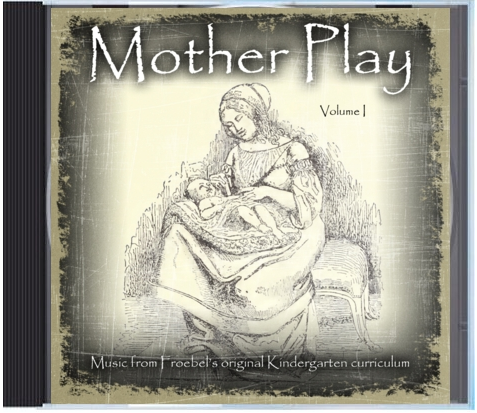
Just in time for mother's day, comes the release of Mother Play Volume 1.  This CD is a compilation of music from two books.  The first is the 1906 English translation of Fredrich Froebel's “Mutter und Koselieder”(Mother and Nursery Songs), entitled "Mother Play."  The second is from a different translation in 1895, entitled "“The songs and music of Friedrich Froebel’s Mother Play.”  The second was not a direct translation, and employed new melodies with simple piano accompaniments.


Special Mother's Day sale!  Regular price will be $12.00, now available for $10.00

Add to Cart $12.00
$10.00


View Cart

The following video will give you a sample of the music from the CD:


CD recorded in a home studio.  Special thanks to Tiffany Muir for recording the music with me.


Dec 2, 2011

Christmas Update

Merry Christmas everyone!  It seems that my last post was made October 15th.  Well, I'm still here, and I've been busy working on two large projects, both of which will be ready for release soon.  One will be a surprise, the other is that I have been recording "Mother Play" with a good friend of mine.


"Mother Play" was written by Fredrich Froebel, who invented Kindergarten.  The music is charming, with an "art song" feel to it.  The original music consisted of unaccompanied duets which many teachers found hard to implement into their curriculum.  The book was widely distributed, but rarely used.  This is unfortunate as Froebel himself considered the music, and especially the moral lessons which accompany them, to be his crowning achievement.


In an effort to make the lessons more musically accessible, a new book, "The songs and music of Friedrich Froebel's Mother play", was published in English in 1895.  These songs have piano accompaniments, and we loved them so much that we decided to record them too.  Watch for our release soon!


Part of this project has been to make these Public Domain files more accessible.  Today I compiled information for the first song, "Play with the Limbs."  More updates will soon follow.

See the "Mother Play" page here.

Oct 15, 2011

Rainbow Castle for the international crowd

Recently one of my reviewers in Germany told me that she loved the Rainbow Castle game, which is part of "Beginning Rhythm", except that she could not use it  with her child because Germany uses a different notation system than America.  I forgot to compensate for that when I made the game.  In Northern and Central Europe, there is a variation of using the letter "H" to represent the white note below "C".  ("B" is the black note right below it.)  It was this notation system that Bach used to sign his name into many of his compositions with the notes "B-A-C-H."


In countries that use fixed do, the note names are simply 'Do', 'Re', 'Mi', 'Fa', 'So', 'La', and 'Si'."

I have now updated the "Beginning Rhythm" program to include game boards that accommodate these notation systems, as well as game boards for solfege with "Ti".

You can download international gameboards here for free.

For the entire game with the playing cards, I refer you to "Beginning Rhythm."  I have mostly added these files as an update for those who already have the game.

Sep 10, 2011

Beginning Rhythm e-book

This product will be part of a new membership site as I relaunch my website.  Please check out our Kickstarter Campaign.
Welcome to “Beginning Rhythm”, a e-program designed to help you teach rhythm to musical beginners of all ages.  Here is what you will find in the program:

Includes all contents of the original “Beginning Rhythm for Preschoolers” released in 2010, and has been updated to include more time signatures, more notes and note combinations, and a 35-page instructional e-book, “Beginning Rhythm”.
The printables in this version have been separated from the e-book for easier reading, and are contained in separate files.  No resizing should be necessary, check your printer settings before printing.  This is the highlight of the whole program, and has already been successfully used with many beginning music students.  I hope you enjoy it!

Mar 7, 2011

Rainbow Matching Game

Experience is the best teacher.  My children love the "Rainbow Castle" game that I created, but my toddler has her own way of playing it.  She likes to take the playing cards and match them on the keyboard.  She became frustrated that the piano was too small for the cards, but spent a lot of time trying to make it work anyway.  This game was created especially for very young children, including toddlers, although any beginning piano student could benefit.


This activity comes as a bonus with my e-book, Beginning Rhythm.  It uses the same playing cards as "Rainbow Castle".  Play with treble or bass clef cards, but not both.  Have fun!

Mar 4, 2011

Rainbow Castle

This game is for the beginning student.  This is a bonus that comes with my e-book, Beginning Rhythm

Print out colored cards, cut out and set aside.  Print gameboard, and if desired, laminate.  Use game pieces of your own choosing.

Draw a card, and move marker forward to the note indicated on card.  Because keys and cards are colored, the student does not actually have to know the note or the notation for it, they only have to match colors.  Next player's move.  If the keyboard on the bottom ends before the next note, they get to the pot of gold and get to ride the rainbow up to the cloud.  On the top keyboard, if the keyboard ends before their note, they get to go to Rainbow Castle, and they win the game!


Tips for play:  Although the student only has to match colors, they are being introduced to note notation and the piano key names.  You can reinforce this by saying, "Move your marker to the 'B'", and so on.  Point out to your students when the notes are in the treble or bass clefs.  Have fun!

Feb 28, 2011

Glissando Note-Reading Game

This is a simple, fast game to reinforce note reading.  The game is based on Parcheesi, with a few twists.

Game setup:  Place the flash cards on one of the blue rectangles.  Each player places four markers on their glissando rectangle.

Game Play:  White goes first, draws a card and places one of their markers on the note that corresponds with the card.  For example, if the note was an "F", they would move forward to the orange "F" note.  Pieces move counter-clockwise around the board.  Place the card on the opposite blue rectangle as a discard pile. Black's turn.  On White's next turn, they have the choice of moving the same piece as before, or moving the next piece out.  If the note is above what the keyboard has available, they do a "glissando" and slide to the other side of the board.  That piece would continue play by moving on the second keyboard.  When a piece returns to the "glissando" that it started on, it moves to the home square.  The first player to move all four pieces to the Home square wins.

Blocking:  When two pieces are on the same note, that note is blocked and no piece from either team may pass it.  In this manner, one player may be able to make the other player loose a turn.  If you can move, you have to move.  The exception for blocking is the glissando places, which have no limit.

Jumping:  If a player lands on a piece that is a third (musical interval, two notes before) another piece, they may "jump" that piece and make a triad, landing a third above the piece.  If the piece that they jumped is their own, the piece remains on the board.  If the piece they jumped belongs to the other player, it has to go back to its original glissando space.  This may land the moving piece on the glissando square and that is okay.  If any of the notes are blocked, pieces may not jump.

This game is great for piano teachers and students to play.  Having the piano teacher name the note for the card that they drew reinforces those notes for the student and takes some of the pressure off of the student.  Parents can play this game with their children to help them practice their note-reading.  Students can play with other students during master classes.  Maybe if you're lucky, siblings will pull it out and play with each other in their spare time.  I hope that you have as much fun playing the game as I did creating it.

Available as a pdf file for $1.00.
Add to Cart

View Cart

Feb 25, 2011

Musical Stairs

This is a simple project that can spruce up the menial task of walking up and down the stairs.  Turn your stair-case into a singing scale!  The idea for this scale came from the piano stairs in Sweden, as seen in the video at the bottom of this page.  Creating a stair-case like that in our home is unpractical for us, but this is a close second.
We created the triangles by printing them on colored paper, not by using up all of the ink in our printer.  My color code is red for do, orange for re, yellow for mi, green for fa, blue for so, purple for la, and pink for ti.  Our staircase was the perfect size to have two full octaves.  We laminated our triangles and then taped them to the staircase.
My children love these, and when I need them to come downstairs, they are more willing to come when I sing the scale as they step on to the respective step.  My husband has joined in the fun, and it is good practice for all of us.  On the flip-side, having a toddler around means that the triangles are not as permanent as I would like them to be, but they are still a sturdy resource to use at will.


These printables are now a part of "The Solfege Train".


Feb 19, 2011

Rhythm for Preschoolers

Beginning Rhythm for Preschoolers is my first e-book, written to help my children learn how to read music. Young children and babies are learning how to read. With the ever-increasing growth of technology, it becomes easy to confirm this. I believe that the ability to learn to read at a young age extends to the realm of music. Why not? They are linguistic geniuses, and music is one of the most natural and universal languages in the world.  For preschoolers, the
best place to start is with
rhythm.
My musical training as a music graduate and an Orff instructor convinced me long ago that I needed to teach my children to read music at a young age. I have drawn from my experience and present to my children the best methods in my toolbox. In Beginning Rhythm for Preschoolers, I share with you the program I am using with my own children. Some of the tools I use include


  • Stick Notation
  • French rhythm solfege
  • Body and instrument percussion
  • Large font for easier reading
  • Bright colors
  • Simple rhythmic elements, only the quarter note, quarter rest, and eighth notes are used
  • Extension activities and games to hold your child's interest
  • Short, simple lessons (as little as a minute a day!)
I have used this program with my piano students, modified it for young children, and adapted it during use to clear up my little boy's confusions. It works! The tools used in this course are widely known and used by many professional musicians. They have a proven track record for success. My only genius, if I have any at all, is taking these elements and further simplifying them for my two-year-old. He can read music at the level presented in this course, and your child can learn too.

New Bonus Materials!

Now includes two note-reading games specifically designed for the preschool crowd:


The  e-book is 26-page. It includes all of the templates you need, and instructions to make, everything that you see pictured here:


Beginning Rhythm for Preschoolers also includes
  • Instructions on how to use the manipulatives
  • A suggested order for teaching
  • Trouble-shooting guides for tricky concepts
  • Tips for maintaining your child's interest
  • My own experiences with the material

Note:  This product is no longer available.  It has been upgraded, and integrated into a new product, "Beginning Rhythm", available here:  Beginning Rhythm new release
    Related Posts Plugin for WordPress, Blogger...