Showing posts with label General music tips. Show all posts

Oct 5, 2011

Rhythm Guessing Game

Perhaps I have been watching a little too much Sesame Street with my children...

In this video, we play a rhythm "guessing game", where a rhythm is spoken, and the student "guesses" where a certain rhythmic element is.  It's a listening exercise.  Watch this video with your student or child...


There are many applications for this kind of game.  As shown, it is best for the younger beginning student.  An older child, even if a beginner, may tire of it quickly.  Here are some extension activities to keep them engaged:
  • Notate the whole measure with rhythm sticks or note cards.
  • Mix and match different rhythmic elements, as in the last example, to make the game more challenging.
  • Don't tell them what rhythmic elements you are going to use.  Make them guess!
  • Have the child create a measure for you to guess.  (A memory game in and of itself.  Kids often do better than adults!)
  • Rather than clap the rhythm, play it on a percussion instrument.
  • Do longer sequences.
If you are interested in the templates used in the video, they are part of the Beginning Rhythm package, but you can easily make your own rhythm cards by hand on index cards.  You can also use Popsicle sticks or coffee straws for stick notation.  Just do it, and have fun!

Sep 20, 2011

The music of life

Music is everywhere.  We hear it all the time, but finding it is the challenge.  Music is defined by thefreedictionary.com as

mu·sic ( n.)

1. The art of arranging sounds in time so as to produce a continuous, unified, and evocative composition, as through melody, harmony, rhythm, and timbre.
2. Vocal or instrumental sounds possessing a degree of melody, harmony, or rhythm.
3.
           a. A musical composition.
           b. The written or printed score for such a composition.
           c. Such scores considered as a group: We keep our music in a stack near the piano.
4. A musical accompaniment.
5. A particular category or kind of music.
6. An aesthetically pleasing or harmonious sound or combination of sounds: the music of the wind in the pines.

Today's I want to emphasize number six.

One of my favorite experiences in my 20th century music class was the day we took a break from the textbooks and went on a "field trip."  We were instructed not to talk, but only to listen as we followed our instructor.  Where did we go?  We walked out of the classroom, past all of the practice rooms, and outside.  We walked past the gardens surrounding the building, and around the sidewalk by the road.  Finally we re-traced our steps and went back to our classroom.

What did we hear?  Among other things:

  • Footsteps
  • People breathing
  • Doors opening and closing
  • Professors teaching students
  • Students practicing
  • The wind
  • Birds chirping
  • Cars driving
  • People talking
What was the form of the "unique musical composition" that we had just heard?  Many possible suggestions were validated by the professor.  The underlying theme that was heard throughout the "piece" was footsteps.  One student wore flip-flops that day, and to her embarrassment, but the edification of all, the steady beat of her walking was considered by some to be the pulse of our number.

May I suggest that you do a "sound walk" with your students?  Preface it by telling them that they are going to hear a musical number that no-one has ever heard before, and will never hear again.  As a parent, you have the luxury of trying it in several places.  Take a minute here or there to say "It's sound walk time."  It may be at the grocery store, on a nature walk, driving with the windows rolled down, or walking through your neighborhood.  When they are done, they can draw a picture of what they heard, or of what made the sounds that they heard.

In a busy place, you can play the game, "I hear with my little ear..." (an alternative to eye spy).  "I hear with my little ear the humming of a machine."  "Its it the air conditioner?" "No."  "Is it the elevator?"  "Yes!"

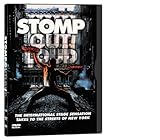
Music can also be made with anything.  My favorite percussion group is "Stomp!"  They are world-class musicians that make music out of ordinary things, from basketballs bouncing, playing cards, and dicing cucumbers.  I have shown excerpts of Stomp Out Loud to my students many times.  Recently I discovered that they partnered up with Seasame Street to make a DVD called "Let's Make Music", which I love and highly recommend for the little ones.  Your local library may have it.  Here's a little trailer.

Either scripts and active content are not permitted to run or Adobe Flash Player version10.0.0 or greater is not installed.

Get Adobe Flash Player

What is the take-home message of this post?  Find ways to discover music in your everyday life, and encourage your children to do the same.  Get out the kitchen pots and pans and experiment with the different sounds that they make.  Does a metal bowl sound better when you hit it with a wooden spoon, or a metal one?  When you are driving in the rain, point out the steady beat that the windshield wipers make.  Slap your hands on the wall and have some fun.  Take time to listen.  You don't have to go to the symphony to hear and experience live music.

Apr 21, 2011

Rhythm Solfege verses Counting

This post is in answer to a question from Sarah from the post "rhythm blocks".  Sarah asks:

"Do you think this (rhythm solfege) may be better than teaching them 'semibreve has 4 counts. minim has 2 counts, etc and having them clap the counts?"

My short answer, and this is only my opinion, is that it depends.  How would you count this sequence?

There are a myriad of ways.  You might say "One, Two, Three, Four. One-and, Two, Three-and, Four."  Some people like to substitute nonsense words, which is especially appealing to younger children.  For example, "Cat, Cat, Cat, Cat. Ti-ger, Cat, Ti-ger, Cat."  Another way is to use rhythm solfege, which I prefer for a sequence like this: "ta, ta, ta, ta.  ti-ti, ta, ti-ti, ta". (I will grant that there are other systems for rhythm solfege, but this is the one that I use).
Which is best?  Well, it depends on the child, it depends on their musical maturity, and it depends upon what will give you results.  System one focuses on the whole measure, emphasizing the down-beat.  System two is great for building confidence.  Who doesn't like cats and tigers?  (or gum and candy, or cars and airplanes, or...).  But ultimately, they remain nonsense words that are not consistent.  The third system would be my first approach.  Why?
  1. It helps children focus on the individual notes and not how they fit into the measure.
  2. It is a consistent (a quarter-note/crotchet is always "ta", even when the meter is 6/8).
  3. It is fairly easy for children to play the rhythm correctly with this method.
In short, rhythm solfege is a valuable asset for your musical tool-box.  However, it is not a substitute for teaching your students that it is a quarter note.  I tell my students that like a cow says "moo", a quarter-note says "ta".

How would you count this measure?

This one is actually a little trickier, especially for younger students.  The first measure was more natural to count because we usually speak with similar rhythms.  On the other hand, the only time you would speak for four counts is when pausing to say "umm..."  The nonsense-syllable approach is simply not applicable here.  This leaves us with two approaches:
  1. "ONE-two-three-four, ONE-two, THREE-four, ONE-two-three, FOUR
  2. Ta-ah-ah-ah, Ta-ah, Ta-ah, Ta-ah-ah, Ta.
The verdict is out on which one is better.  If all measures were like these, I would probably favor the first approach because it is more concrete.  In my video for the rhythm blocks I demonstrated the second approach.  Bouncing a "ta" to make it "ta-ah" is a little bit abstract for a child, which is why I created the rhythm blocks in the first place, to help them see what is happening.
I do think that children need to know how many counts a note gets.  Counting "ta-ah" implies two counts, but sometimes it is easier for younger musicians to count it "One-two" (or "three-four" depending on where it falls in the measure).

The verdict is out.  I don't know which way is better, so I use both and between the two we somehow get the job done.  Good luck!

Mar 9, 2011

Of learning to talk before you can read

Today I read a forum post from a proponent of Simply Music.  She talked about how hard and somewhat unnatural the current methods of piano teaching can be for the student.  Yes, it is important to learn how to read music, but a young child who sits at the piano is less interested in learning what the little black notes mean, and more interested in playing real music on the piano.  After taking a break from teaching, I took on my younger siblings as students earlier this week.  For three of them, it was their first lesson.  They were so excited to be here, and the first thing that they wanted to do was to play me a song that they wrote.  No.  To play me a song that they made up.  They did patiently wait for me to tell them about bar lines, measures, and rhythmic notation, but it was not the fire that had brought them to that lesson.  They want to PLAY!  They want to make beautiful music on the piano.  As a teacher, my first job is to first, do no harm.  I really hope that I do not destroy that fire, and that I can help them achieve their expectations for themselves.

Harness that fire, yes.  Ultimately, they do need to learn how to read music.  They do need to learn technique, how to count a beat, and how to work hard at the piano and practice.  Of course they do!  But all of the technique, all of the reading, and all of the hard work of sticking through the practice sessions are not the ultimate goal.  They are the means to the end.  That end goal is to be able to enjoy the instrument.  To feel the satisfaction of playing fun music, and knowing, not just being told, that the music that they have to share is enjoyable and worth listening to.

When I was in Jazz band at the University, we auditioned every year.  I had been in band for a couple of years and felt confident that I would make it into the Ensemble, the "lesser" band which was appropriate for my course load in the vocal department.  Then a new young man came, and his talent just floored me.  He was absolutely remarkable!  His improvisation was fantastic, and it was obvious that everyone was pleased with what he had to offer.  I was pleased!  With a hint of sadness, I reminded myself that I still had chamber singers to look forward to.  But when the audition results came in, my name was on the list and his wasn't.  I was really surprised.  I saw the young man the next day, with a big smile on his face as he headed to the jazz professor's office.  When I had the opportunity to speak with him, he told me that they were really excited about his talent, but that he needed to learn to read music before he could play in the jazz orchestra or ensemble.  They started a jazz combo course that semester and worked with him.  The next fall he was in the jazz orchestra, reading music and playing superbly.  The girls went nuts during his solos!

He learned to play like that without learning to read music!  He understood chords and how they worked, he listened, listened, and listened to musicians that he loved, and he practiced, practiced, and practiced, creating the music that he wanted to hear.  When the time came that he needed to know how to read music, he took the time to figure it out, and away he went.  I don't remember his name, but he inspired me.

So what is my application from this lesson?

I like the idea of using colors to help children decode music.  I don't object at all to the finger-numbers in the John Thompson method because it gets children playing beautiful music sooner than other methods, and if the teacher follows the teaching suggestions, it also teaches the students to transpose.  Using a method book also familiarizes the student with music notation from the start, and I like that.  I am not ready to pull away the sheet music all together.

But I do think that I would be well served to get over how annoying Peter-Peter-Pumpkin-Eater and Heart and Soul can be when you have heard it a million times, and show my students how to play it.  Let them play something fun right from the start.  Let them taste success.  Give them a reason to learn how to read music.  I didn't learn how to improvise until I went to a community college that desperately needed a pianist in the band.  I fell in love with jazz and continued with it when I went on to USU.  It was my "candy" class, and oh, how I loved it!  My students need more time to be creative and express themselves, and less time drilling flash cards.  More time playing chords on the piano, hearing, touching and feeling how they work, and less time developing the fine motor skills of drawing snowmen on the music staff.  Music needs to be alive for them.

Following a method course can and does produce results of course, but many children quit the system only to wish as adults that they had been "talented" enough to play.  Granted, some people have more musical talent than others, but I believe that all children, and adults for that matter, have the ability to learn music.  Perhaps it is the system and not the talent that is lacking.

I am not necessarily endorsing Simply Music in this post, but I do think that they have a good point.  Let children learn how to "speak" music, to understand it, and then the desire to read will come.  There will be a reason for it.  I have never purchased their products and I don't plan on it any time soon.

I am still going to use the Jonh Thompson method books with my siblings and children.  The songs are fun, even from the start.  The accompaniment book for "Teaching little fingers to play" is delightful.  I had to order it online, music stores do not carry it.  But I am also giving myself permission to break away from the typical lesson routine that our society endorses, and trust myself as a musician and teacher to help my students express themselves and mentor them in that process.  I started to dip my feet in the water with my studio in the past, but now I am ready to jump in.  Care to join me for a swim?

Mar 8, 2011

Practice makes hard things easy...

"I can't do it!"
"It's too hard."
"I don't like this song."
"Are we done yet?"


These words have been uttered in some form or another since the dawn of music.  I have heard them!  I remember uttering them.  It happens, no matter how fantastic a teacher you are, or how talented and naturally motivated the child may be.  How we handle these hurdles is the thing that can make or break how the child will move forward.  Every child is different, and so my responses to these statements vary, but here is my basic approach:

"I can't do it!"

Yes you can!
Um, no, that's not what I say.  If a child says that, chances are that they really can't.  At least not yet, but they don't know it.  If you respond with a counter-argument, you have started an argument.  A better response would be to say, "Yes, you can't do it yet.  I couldn't at first too, but I did learn how.  It will be hard work, but it will be worth it."

"It's too hard."

"You're so talented, this should be easy for you!" 

Again, no.  As the title of this post suggests, Practice makes hard things easy.  A good follow-up may be to share a brief personal story about how you overcame something that was hard.


"I don't like this song."

My response to this one varies from student to student, and from the circumstance.  Some students soar through their books, and get caught on one piece.  It will not mar their whole musical education if they skip that one.  In fact, giving them the power to veto a number can be very empowering for the student.  They have choices!
However, when a student says this to me, I have to wonder what is motivating this statement.  Do they really not like the song?  Fine, let's move on.  But what if they are just stuck on a specific measure?  The left hand has to change positions while the right hand has tricky fingering.  Challenges like that are not going to go away in the long run.  If the student repeats this statement at every lesson, it is probably more than a distaste for the melody that you are dealing with.
What do you do then?  Music should be fun, and the joy of music should not be choked by the need to overcome difficult phrases or challenges. 
Eat your vegetables, but make room for dessert.  Assuming that the method book that you are using really is a good one, stick with it.  But end the lesson with a fun activity (I try to do this anyway).  Make a deal that you get to pick some of the music, and they can pick a song that they want to learn.  Disney songs are often an appealing "dessert" for children.

"Are we done yet?"


First of all, don't take it personally.  Children are children, after all.  What is the attention span of the child?  A half-an-hour lesson can be a L-O-N-G time for a six-year-old, or even an adult.  It took me a few years of teaching to learn this, but a good solution is to have an "activity bag".  Inside were rhythm manipulatives, flash-cards, aural training exercises, and reward stickers.  Granted, if the child says this five minutes into the lesson as soon as they get to a tricky spot, you need to address that first.  But if the child is getting bored and the lesson seems long, as a teacher, maybe you need to shake things up a bit.  Incorporate movement into the lesson.  Let them stand up and stretch.  Let them stomp the beat and clap the rhythm.  Listen to a musical recording and let them dance.  Play with music manipulatives on the floor.  Yes, you can have a potty break, but come right back!

The truth is, maybe the child just isn't ready for a half-hour lesson, and that is really okay.  You may need to talk to the parent about doing a shorter lesson.  I taught one family that had a 4-year-old who REALLY wanted to take lessons like her big sisters.  Our arrangement was to shorten her 8-year-old's half-hour lessons by 10 minutes, and give it to the 4-year-old.  This worked remarkably well for both of the girls.

Conclusions

Being a music teacher or parent with an unwilling child can be difficult and frustrating.  There can be a fine line between pushing too hard and not challenging the student enough.  Every child is different, every teacher is different.  I admit that some of my students have quit piano.  Some parents have decided that I wasn't the best teacher for their child and found a different one.  One mother wanted to find a man to teach her boy.  That's okay, I truly hope that it worked out for them.  I teach as well as I can, and that is what is important.  For some children I was a perfect match, and our personalities worked well together.  Other relationships didn't work out as well.  If you find yourself wanting to find a different teacher for your child, a good music teacher will understand, and even agree.  Ask them if they have suggestions for alternatives.  Band?  Choir?  Orchestra?  Music competitions?  What instrument would be a good fit for this child?  Never let a teacher bully you into continuing lessons.  Do what is best for your family, and don't feel guilty about it.

As a parent, if you have a child who is struggling with music, I invite you take the time to step back and ask yourself what is motivating that struggle.  Is the teacher pushing them too hard, or just expecting them to do their best?  Are you pushing them too hard?  Maybe buried frustrations from dance class or soccer, or school are rearing their ugly head during music lessons.  Is music the offending party?  This can be very stressful for everyone.  Address the needs of your child.

Music is so beneficial for children, but maybe piano, trumpet, singing, or violin is not the best choice for the student RIGHT NOW.  It's okay to take a break.  It is okay to quit lessons.  It is okay to let your child drop out of orchestra.  Really, it is.  But it is also okay to reward your children for sticking through it.  It is okay to talk about the importance of learning music (it is important!).  It is okay tell your child that they don't get to watch TV until they have practiced.  Finding that balance will vary from family to family, and child to child.

Good luck finding that balance for your family.

Feb 12, 2011

The importance of ear training

Unfortunately, I was not introduced to aural skills through independent study until I was in college. I wanted better for my students, and have regularly included 2-5 minutes of aural training in my lessons with them.


Here is an ear training manipulative that I created for my students. 

It is simply two large measures for piano with no music written inside. I printed this out on cardstock and then laminated it, which essentially turned the card into a white board. I was able to let my students write on it with crayon (washable crayon also works), and then wipe it off with a piece of scrap cloth I made from an old T-shirt. You can also use pennies or glass pebbles from the dollar store to mark the notes, as rhythm is not part of this exercise.
To use the board, I would give the students the first note, and ask them to produce the second on the board after they heard me play it. I started with simple intervals and progressively got harder. After they had a firm understanding of melodic intervals (the notes were played one at a time), I made the exercise harder by playing melodic sequences, and for my more advanced students, I introduced harmonic intervals, giving them the lower note, but playing both notes at the same time.
My challenge: Find ways that you can help your student/child's musical ear become more sophisticated, and begin working with them on a consistent basis.

Practice time logs

That which can be monitored can be improved. I have found in my teaching that when my students have been struggling with a song for a few weeks, we always come to the inevitable question: "How much have you been practicing?" Yes, that's what I thought.
I am so grateful that my piano teacher consistently asked for a report on how much I had practiced during the week. If I had not filled out a time-log, she made me do my best guess right there in the lesson before we warmed up or did anything else. Because I knew that I would be accountable for my work, I was motivated during the week to have something positive to report. On the flip side, when I was preparing for competitions, it was encouraging to be able to say "I practiced three hours today!"

My last couple years of teaching I finally learned from my teacher and created a time log.  I put Sunday in parentheses because I never practice my lessons on Sunday, and I don't require Sunday practice of my students, but if they did practice their hymns or anything like that, they could record it in that spot.
Recording your time log is one simple, little thing you can have your student/child do that makes a big difference over the long haul.
Related Posts Plugin for WordPress, Blogger...