Perhaps I have been watching a little too much Sesame Street with my children...
In this video, we play a rhythm "guessing game", where a rhythm is spoken, and the student "guesses" where a certain rhythmic element is. It's a listening exercise. Watch this video with your student or child...
There are many applications for this kind of game. As shown, it is best for the younger beginning student. An older child, even if a beginner, may tire of it quickly. Here are some extension activities to keep them engaged:
Notate the whole measure with rhythm sticks or note cards.
Mix and match different rhythmic elements, as in the last example, to make the game more challenging.
Don't tell them what rhythmic elements you are going to use. Make them guess!
Have the child create a measure for you to guess. (A memory game in and of itself. Kids often do better than adults!)
Rather than clap the rhythm, play it on a percussion instrument.
Do longer sequences.
If you are interested in the templates used in the video, they are part of the Beginning Rhythm package, but you can easily make your own rhythm cards by hand on index cards. You can also use Popsicle sticks or coffee straws for stick notation. Just do it, and have fun!
Music is everywhere. We hear it all the time, but finding it is the challenge. Music is defined by thefreedictionary.com as
mu·sic (n.)
1. The art of arranging sounds in time so as to produce a continuous, unified, and evocative composition, as through melody, harmony, rhythm, and timbre.
2. Vocal or instrumental sounds possessing a degree of melody, harmony, or rhythm.
3.
a. A musical composition.
b. The written or printed score for such a composition.
c. Such scores considered as a group: We keep our music in a stack near the piano.
4. A musical accompaniment.
5. A particular category or kind of music.
6. An aesthetically pleasing or harmonious sound or combination of sounds: the music of the wind in the pines.
Today's I want to emphasize number six.
One of my favorite experiences in my 20th century music class was the day we took a break from the textbooks and went on a "field trip." We were instructed not to talk, but only to listen as we followed our instructor. Where did we go? We walked out of the classroom, past all of the practice rooms, and outside. We walked past the gardens surrounding the building, and around the sidewalk by the road. Finally we re-traced our steps and went back to our classroom.
What did we hear? Among other things:
Footsteps
People breathing
Doors opening and closing
Professors teaching students
Students practicing
The wind
Birds chirping
Cars driving
People talking
What was the form of the "unique musical composition" that we had just heard? Many possible suggestions were validated by the professor. The underlying theme that was heard throughout the "piece" was footsteps. One student wore flip-flops that day, and to her embarrassment, but the edification of all, the steady beat of her walking was considered by some to be the pulse of our number.
May I suggest that you do a "sound walk" with your students? Preface it by telling them that they are going to hear a musical number that no-one has ever heard before, and will never hear again. As a parent, you have the luxury of trying it in several places. Take a minute here or there to say "It's sound walk time." It may be at the grocery store, on a nature walk, driving with the windows rolled down, or walking through your neighborhood. When they are done, they can draw a picture of what they heard, or of what made the sounds that they heard.
In a busy place, you can play the game, "I hear with my little ear..." (an alternative to eye spy). "I hear with my little ear the humming of a machine." "Its it the air conditioner?" "No." "Is it the elevator?" "Yes!"
Music can also be made with anything. My favorite percussion group is "Stomp!" They are world-class musicians that make music out of ordinary things, from basketballs bouncing, playing cards, and dicing cucumbers. I have shown excerpts of Stomp Out Loud to my students many times. Recently I discovered that they partnered up with Seasame Street to make a DVD called "Let's Make Music", which I love and highly recommend for the little ones. Your local library may have it. Here's a little trailer.
What is the take-home message of this post? Find ways to discover music in your everyday life, and encourage your children to do the same. Get out the kitchen pots and pans and experiment with the different sounds that they make. Does a metal bowl sound better when you hit it with a wooden spoon, or a metal one? When you are driving in the rain, point out the steady beat that the windshield wipers make. Slap your hands on the wall and have some fun. Take time to listen. You don't have to go to the symphony to hear and experience live music.
Egg shakers can be pricey, upwards of $10 each for premium eggs. For a cheaper version, I have been waiting for Easter, and now the dollar store is stocked and ready to accommodate this project.
Materials needed:
Empty egg shells
Hot Glue Gun
Rice, beans, wheat, small beads, or other hard material to fill the egg
Step One: Fill the eggs with your material. This was a fun activity for my toddler and preschooler, helping them develop their moter skills.
Step Two: Squeeze hot glue along the inside edge of your egg and close tight, holding the egg for about 15 seconds to assure a good seal.
Step Three: Shake your eggs and enjoy them! It shouldn't be hard to find a place to store them.
This craft was very easy to do. When I was in college I got to play the eggs a few times in Jazz band. Their use extends beyond child's play. Music teachers can make a classroom set. Music therapy professionals could use them in a myriad of ways. I have decided to make several more and to give them away as gifts. The set pictured above will be used with my children for repeated Easter egg hunts as well as music time.


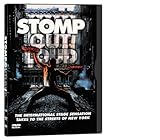
 to my students many times. Recently I discovered that they partnered up with Seasame Street to make a DVD called "


